
Benefits of Print on Demand vs. Bulk Printing: A Comprehensive Comparison
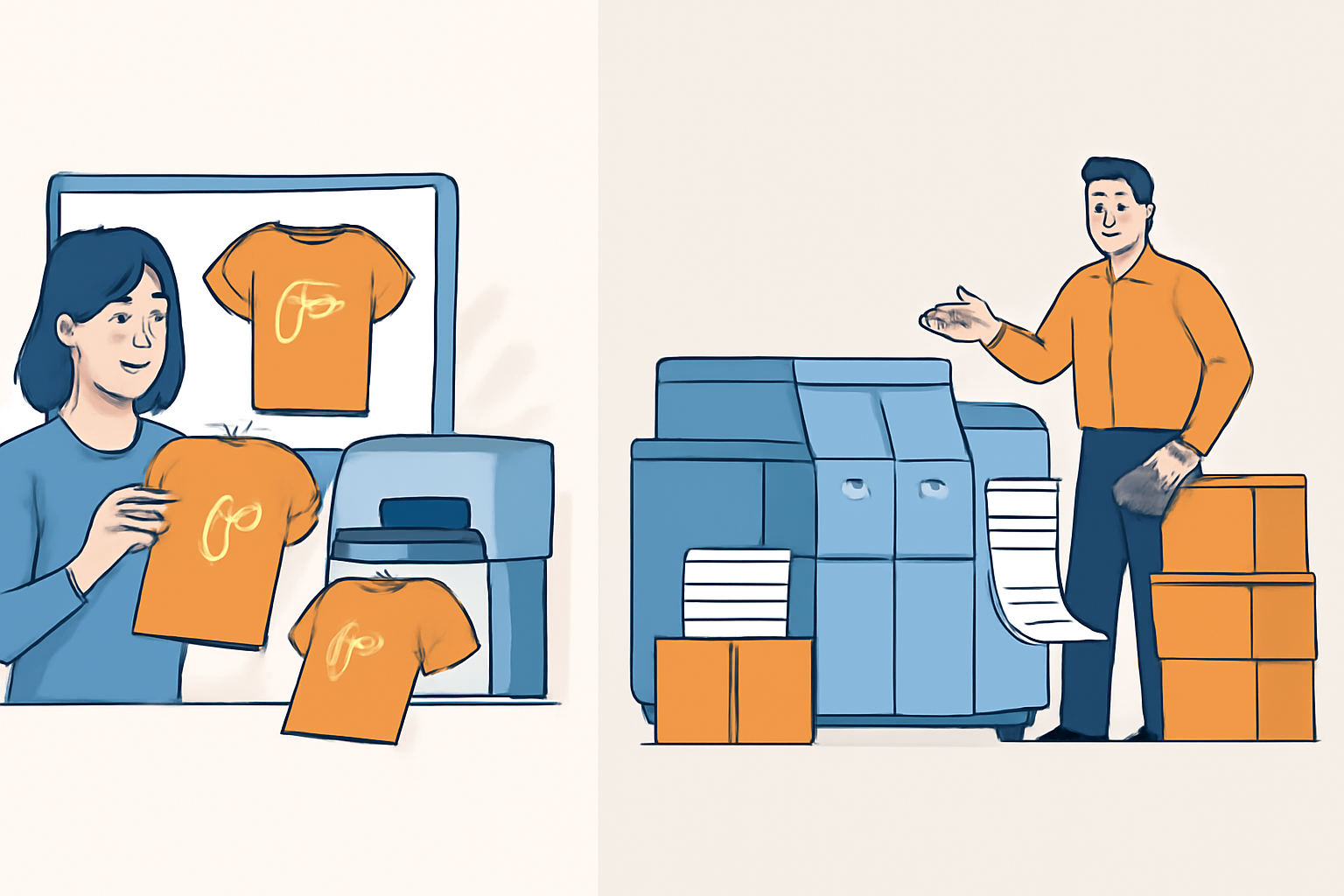
When starting a business in the world of online selling, choosing the right printing method is crucial. Print on demand (POD) and bulk printing are two popular options, each with unique advantages and challenges. Understanding these differences can help you make an informed decision based on your business goals and resources.
This article will provide a detailed comparison of the benefits of print on demand over bulk printing. We'll explore key factors such as cost, inventory management, customization, and fulfillment speed, helping you determine which method is the best fit for your online store.
Table of Contents

Understanding Print on Demand
Print on demand is a business model where products are printed only when an order is placed. This approach allows sellers to offer a wide range of items without the need to maintain a physical inventory. Here are some notable features of print on demand:
Low Upfront Costs
Since products are printed after an order is received, there's no need to invest heavily in inventory upfront. This makes it an attractive option for new entrepreneurs with limited budgets. How to Fix Common Print on Demand Challenges.
Customization and Personalization
POD allows for easy customization of products, making it ideal for sellers focused on unique designs or personalized gifts. For instance, you can easily create Shopify personalized products that cater to specific customer preferences.
Flexible Product Range
With POD, you can offer a diverse array of products without worrying about storage space or excess stock. This flexibility enables you to quickly adapt to trends or customer demands.
Understanding Bulk Printing
Bulk printing involves producing a large quantity of items before they are sold. This traditional method has its own set of advantages and drawbacks. Here's what you need to know:
Lower Cost Per Unit
Producing items in bulk generally reduces the cost per unit, allowing for higher profit margins if sales are brisk. However, this comes with the risk of overproduction. Here are some key points to consider:
- Economies of Scale: The more you print, the lower the cost per item. This is due to fixed costs being spread over a larger number of units.
- Minimum Order Quantities (MOQs): Many printing companies require a minimum order, which can lead to excess inventory if sales do not meet expectations.
- Pricing Negotiations: Ordering in bulk can give you leverage to negotiate better pricing with suppliers.
To mitigate the risk of overproduction, consider conducting market research and pre-launching your products to gauge interest. This can help you make informed decisions about how many units to print.
Quality Control
When you print in bulk, you have greater control over the printing process, which can lead to consistent quality across all products. This is particularly important for brands that prioritize their reputation. Here are some factors to keep in mind:
- Proofing Process: Always request a sample or proof before committing to a full print run. This allows you to catch any potential issues early.
- Consistent Materials: Bulk printing often allows for the use of the same materials across all items, ensuring a uniform look and feel.
- Quality Checks: Implement a quality control process during production. This can include regular checks at different stages of printing to ensure standards are met.
Remember that maintaining quality is crucial, as poor quality can lead to returns and damage your brand's reputation.
Immediate Availability
Bulk printed items can be shipped immediately upon order, which can enhance customer satisfaction and reduce wait times. Here are some benefits associated with this aspect:
- Fulfilling Orders Quickly: Having stock on hand means you can fulfill orders faster, which is especially beneficial during peak shopping seasons.
- Reduced Shipping Costs: Shipping costs can be lower per unit when sending out bulk items, allowing you to potentially pass savings on to customers.
- Promotions and Discounts: With immediate availability, you can run flash sales or promotions, enticing customers with quick delivery times.
However, it's important to balance immediate availability with the risk of unsold inventory. Regularly reviewing sales data can help you adjust your bulk orders accordingly.
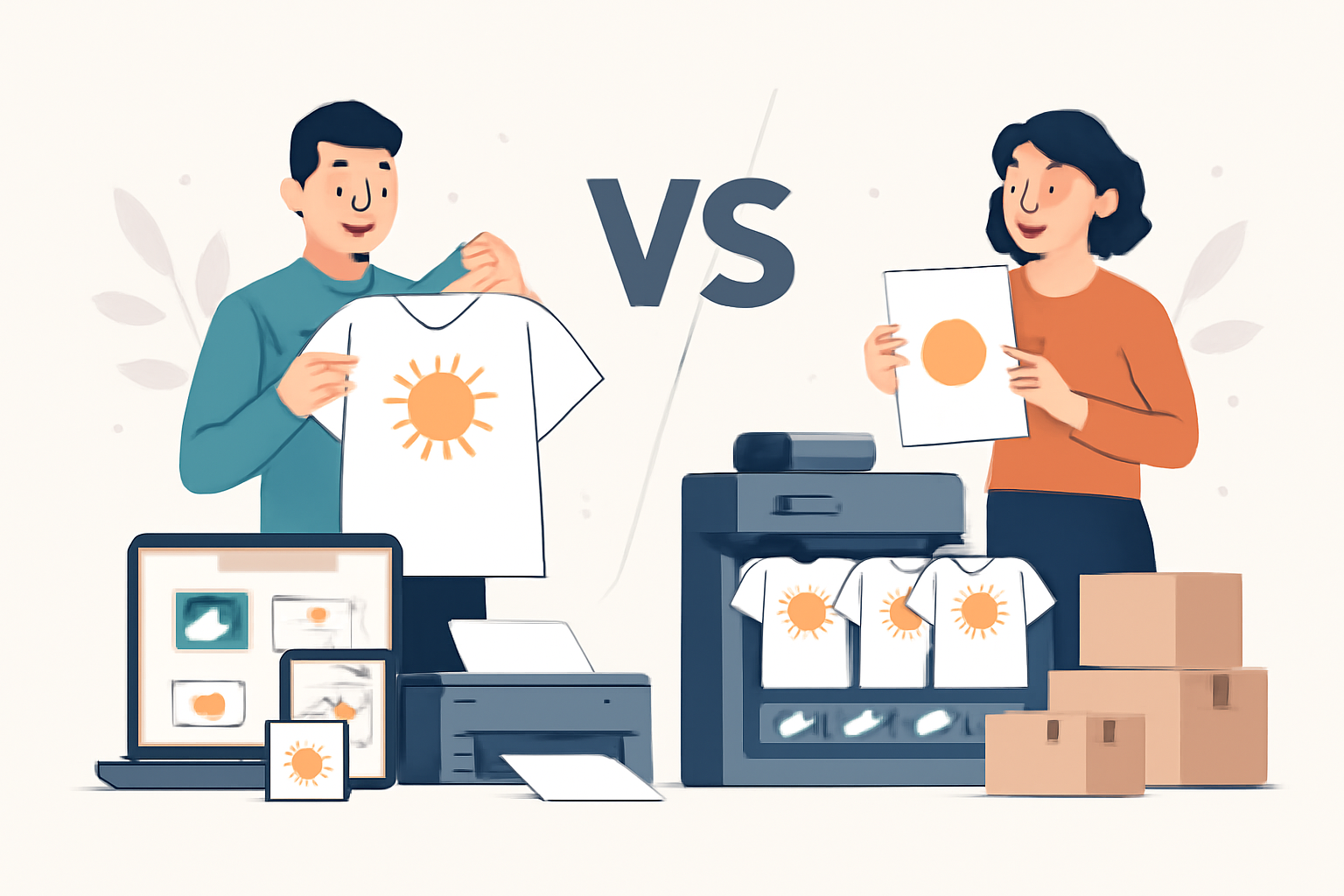
Comparative Analysis: Print on Demand vs. Bulk Printing
| Feature | Print on Demand | Bulk Printing |
|---|---|---|
| Initial Investment | Low | High |
| Inventory Management | No need for inventory | Requires storage space |
| Customization | Highly customizable | Limited customization |
| Production Time | On-demand | Pre-printed |
| Cost per Unit | Higher | Lower |
| Risk of Unsold Goods | Minimal | High |
| Scalability | Highly scalable | Scalable but risky |
Initial Investment
Print on demand (POD) requires significantly less upfront capital compared to bulk printing. With POD, you can start with minimal investment, often just the cost of setting up an online store and paying for your first few products. This makes it an ideal choice for new entrepreneurs who want to test the waters without sinking a fortune into inventory. **Checklist for Initial Investment in POD:** - Set up an online store (cost: $29/month for platforms like Shopify). - Choose a POD provider (some charge no upfront fees). - Budget for initial marketing expenses (consider a minimum of $100 for ads). - Purchase a few sample products to showcase (typically $5-$30 each). In contrast, bulk printing often requires a large order to get a reasonable price per unit, which can range from hundreds to thousands of dollars. This can be a significant barrier to entry for many sellers.Inventory Management
One of the standout benefits of print on demand is that you don't have to worry about managing inventory. This means no storage costs, no tracking of stock levels, and no risk of unsold products taking up space in your home or warehouse. Everything is handled by your POD provider. **Common Mistakes in Inventory Management:** - Assuming you can predict demand accurately-always prepare for fluctuations. - Not regularly reviewing sales data to adjust your offerings. - Overlooking the importance of product quality checks from your POD provider. On the other hand, bulk printing requires careful inventory management. You need to factor in storage costs, the potential for overstock, and the logistical challenges of shipping products from your storage location.Customization
POD shines in the area of customization. You can easily create unique designs for each product, appealing to niche markets and allowing for personalization options that bulk printing simply cannot match. This flexibility helps you cater to specific customer preferences and trends. **Steps to Maximize Customization in POD:** 1. Research current trends in your niche (use tools like Google Trends). 2. Create multiple designs for the same product to test which performs best. 3. Offer options for personalization (like names or messages) to increase appeal. In contrast, bulk printing limits you to predefined designs and sizes. Changes often require a new print run, which can be costly and time-consuming.Production Time
With POD, production happens only when an order is placed, which means you can quickly adapt to customer demand without being stuck with excess stock. This on-demand model allows for faster turnaround times, enhancing customer satisfaction. **Tips for Reducing Production Time in POD:** - Work with a reliable POD provider known for quick processing. - Optimize your product listings to minimize errors during order fulfillment. - Keep an eye on your order volume to anticipate busy periods. Bulk printing, however, operates on a pre-printed basis, meaning that once you place an order, you have to wait for the entire batch to be produced before you can start selling.Cost per Unit
While the cost per unit is higher in POD, this is often offset by the lack of upfront investment and the elimination of inventory costs. You only pay for what you sell, which can be advantageous for emerging brands. **Considerations for Cost Management in POD:** - Compare different POD providers to find the best pricing. - Factor in shipping costs when calculating your final price. - Explore bulk discounts for high-volume orders if you establish a steady customer base. In contrast, bulk printing offers lower costs per unit, but this is only beneficial if you can sell all the printed items. Unsold goods can lead to significant losses.Risk of Unsold Goods
POD drastically reduces the risk of unsold goods since products are created only after a sale is made. This model allows you to experiment with various designs without the fear of leftover inventory. **Strategies to Minimize Unsold Goods in POD:** - Use social media to gauge interest before launching new products. - Implement limited-time offers to create urgency. - Regularly analyze sales data to refine your product line. On the flip side, bulk printing carries a high risk of unsold goods, especially if market demand shifts or if you miscalculate your sales projections.Scalability
POD is inherently scalable. As your business grows, you can easily add new products and designs without worrying about inventory management. This allows you to focus on marketing and customer engagement rather than logistics. **Steps to Scale Your POD Business:** 1. Identify your best-selling products and consider expanding your offerings in that niche. 2. Leverage social media and email marketing to reach a broader audience. 3. Partner with influencers to promote your products and drive sales. While bulk printing can also be scaled, it comes with risks. If you increase your order size without sufficient demand, you may end up with a surplus that you cannot sell. This can lead to financial strain and operational headaches. In conclusion, while both print on demand and bulk printing have their advantages, POD offers significant benefits in terms of flexibility, risk management, and adaptability. For those looking to enter the gift-selling market, print on demand provides a more accessible and less risky pathway to success.Trade-offs Between Print on Demand and Bulk Printing
When deciding between print on demand and bulk printing, consider the trade-offs based on your business objectives:
Cost vs. Flexibility
While bulk printing offers lower costs per unit, it requires a significant upfront investment and risk of unsold inventory. In contrast, print on demand provides flexibility with lower initial costs but may come with a higher price per item. To illustrate this, let's break down the costs:
- Bulk Printing: Typically, the cost per item decreases as the quantity increases. For instance, printing 1,000 t-shirts might cost $5 each, while 100 t-shirts could cost $10 each. However, you need to pay for the entire batch upfront, which can strain your cash flow.
- Print on Demand: You might pay $15 per t-shirt, but you only pay for what you sell. This model allows you to test different designs without the risk of leftover stock. For example, if you launch a new design and only sell 50, you only pay for those 50 shirts, not an entire batch.
Common mistakes to avoid include underestimating the demand for products when bulk printing or overestimating sales potential with print on demand. Always conduct market research and consider starting with a small batch in bulk printing if you're unsure.
Customization vs. Consistency
POD is perfect for those looking to offer personalized products, which can be a major selling point. Customers love the ability to customize items, such as adding names or unique designs. This can lead to higher customer satisfaction and loyalty. For example, a seller offering custom mugs can charge a premium price, attracting customers looking for unique gifts.
However, bulk printing allows for consistent quality across a large batch, which can be crucial for brand integrity. If your brand is known for high-quality prints, maintaining that quality in bulk production is essential. Here are some considerations:
- Quality Control: When using bulk printing, you can inspect the entire batch for quality before selling. In POD, you rely on the supplier's quality, which can vary.
- Branding: Bulk printing allows you to create a cohesive brand image, as all products will have the same look and feel. With POD, variations may occur depending on different suppliers.
To avoid pitfalls, ensure you choose a POD supplier with a solid reputation for quality and consistency. This will help mitigate the risks associated with variations in product quality.
Management Ease vs. Control
Print on demand simplifies inventory management, making it easier for new sellers who may not have experience in logistics. You don't have to worry about storage, packing, or shipping. The POD provider handles everything, allowing you to focus on marketing and sales. Here's a checklist to help manage your POD business:
- Choose a reliable POD partner.
- Set up your online store with easy-to-navigate product listings.
- Monitor sales and adjust your designs based on customer feedback.
- Utilize social media for marketing your unique offerings.
On the other hand, bulk printing gives you full control over production, which can be beneficial for established brands with a clear vision. You can dictate every aspect of the production process, from material selection to printing techniques. Consider these factors:
- Production Timeline: With bulk printing, you can plan your inventory based on sales forecasts, ensuring you have stock available during peak seasons.
- Supply Chain Management: You can build relationships with suppliers to secure better rates and terms, which can enhance your profit margins.
However, managing bulk inventory also requires careful planning to avoid overproduction. A common mistake is failing to accurately predict demand, leading to excess stock that may need to be discounted or written off. Utilize sales data and customer insights to make informed decisions about your production runs.
Which Option Fits You?
Your choice between print on demand and bulk printing will largely depend on your business model and goals. Here are some scenarios to help you decide:
Choose Print on Demand If:
- You're starting a new business with limited funds.
- You want to offer customizable items, like those found in Etsy custom product listings.
- You prefer to minimize the risk of overproduction and unsold inventory.
- You want to test different products without a long-term commitment.
If you find yourself relating to these scenarios, here are some practical steps to get started with print on demand:
Steps to Start with Print on Demand
- Research Your Niche: Identify a target audience and niche market. Use tools like Google Trends or social media insights to gauge interest.
- Select a Print on Demand Platform: Choose a reliable platform (e.g., Printful, Teespring, or Redbubble) that aligns with your product vision and integrates well with your sales channels.
- Create Unique Designs: If you're artistic, design your own graphics. If not, consider hiring a freelancer or using design tools like Canva to create appealing designs.
- Set Up Your Online Store: Use platforms like Shopify or Etsy to create your store. Make sure to optimize your product listings with keywords that potential customers might use.
- Market Your Products: Leverage social media, email marketing, and influencer partnerships to promote your products. Focus on building a community around your brand.
- Analyze and Adapt: Use analytics tools to track sales and customer behavior. Be prepared to pivot or refine your offerings based on feedback and sales data.
Choose Bulk Printing If:
- You have established demand for specific products and can forecast sales.
- You're looking to maximize profit margins through a lower cost per unit.
- You have the storage space and resources to manage inventory.
- You prioritize quality consistency and have experience in logistics.
If you find yourself leaning towards bulk printing, consider the following steps and tips:
Steps to Start with Bulk Printing
- Conduct Market Research: Validate your product ideas by conducting surveys or focus groups to ensure there is a demand before committing to large orders.
- Choose a Reliable Printer: Research and select a printing company known for quality and reliability. Request samples to evaluate their work before placing a large order.
- Calculate Costs: Factor in all costs, including production, shipping, and storage, to determine your pricing strategy. Aim for a healthy profit margin that supports your business sustainability.
- Manage Inventory Wisely: Implement inventory management software to keep track of stock levels, sales, and reorders. Avoid overstocking by monitoring sales trends closely.
- Develop a Marketing Strategy: Create a solid marketing plan that includes online advertising, social media campaigns, and possibly local events to promote your bulk products.
- Evaluate Performance Regularly: Regularly review your sales data and customer feedback to make informed decisions about future orders and product offerings.
Common Mistakes to Avoid
Whether you choose print on demand or bulk printing, be aware of these common pitfalls:
- Neglecting Market Research: Failing to understand your audience can lead to unsold inventory or lack of interest in your products.
- Underestimating Shipping Costs: Both models have shipping considerations. Don't overlook this aspect when calculating your pricing.
- Ignoring Quality Control: For bulk printing, ensure your products meet quality standards to avoid returns and negative reviews.
- Overcomplicating Designs: Keep designs simple and appealing. Overly complex designs may not translate well onto products.
By carefully considering your options and following these guidelines, you can choose the printing method that best aligns with your business goals and resources. Whether you opt for print on demand or bulk printing, each has its unique advantages that can be leveraged for success in the online gift market.
Conclusion: Making Your Choice
In summary, both print on demand and bulk printing have their pros and cons. Your decision should be based on your business needs, available resources, and long-term goals. If you're leaning towards starting a Shopify print on demand store, consider enrolling in Print On Demand Coach training to gain the skills and knowledge needed to succeed. Whatever path you choose, being informed will help you navigate your entrepreneurial journey more effectively.
Steps to Evaluate Your Choice
To make an informed decision between print on demand and bulk printing, follow these steps:
- Assess Your Product Range: Determine the variety of products you wish to sell. If you have a diverse range, print on demand might be more suitable as it allows you to offer a wide selection without upfront costs.
- Calculate Your Budget: Create a budget that includes all potential costs associated with both methods. Consider production costs, shipping, marketing, and any platform fees.
- Identify Your Target Market: Understand who your customers are and what they prefer. If your audience values unique, personalized items, print on demand could be the better option.
- Evaluate Your Time Commitment: Consider how much time you can dedicate to managing inventory and orders. Print on demand typically requires less time in inventory management.
- Research Suppliers: Investigate potential suppliers for both print on demand and bulk printing. Look for those with good reputations, quality products, and reliable fulfillment services.
Common Mistakes to Avoid
When deciding between print on demand and bulk printing, be aware of these common pitfalls:
- Underestimating Costs: Many new sellers overlook hidden costs associated with bulk printing, such as storage and unsold inventory. Make sure to account for all expenses in your calculations.
- Ignoring Market Trends: Failing to stay updated on market trends can lead to poor product choices. Regularly research what's popular in your niche to avoid investing in items that won't sell.
- Neglecting Quality Control: In both methods, quality control is crucial. For print on demand, ensure your supplier maintains high standards. For bulk printing, order samples to check quality before committing to a large order.
- Overcomplicating Inventory Management: If you choose bulk printing, ensure your inventory management system is efficient. Complicated systems can lead to errors and lost sales.
- Failing to Test Products: Whether you choose print on demand or bulk printing, testing your products before a full launch is essential. Gather feedback from potential customers to refine your offerings.
Final Thoughts
Ultimately, the decision between print on demand and bulk printing should align with your business strategy. Print on demand offers flexibility and lower risk, while bulk printing can provide cost savings for high-volume sales. Consider your unique situation, and don't hesitate to seek advice from experienced sellers or industry experts. Remember, the right choice is the one that fits your vision and allows you to grow sustainably.
Enjoying This Article? Join The Free POD Community. Connect with other print-on-demand sellers, ask questions, and keep learning inside the Print On Demand Coach community.
Learn More