
Print on Demand vs Traditional Retail: A Comprehensive Comparison

Choosing between print on demand and traditional retail can be a game-changer for your business strategy. Each model has its own set of advantages and challenges, making it essential to understand which option aligns best with your goals. In this comparison, we will break down the key differences, helping you make an informed decision.
Whether you're a budding entrepreneur or an established seller looking to pivot, knowing the nuances of print on demand solutions versus traditional retail will guide you in navigating your business landscape. Let's dive into the details!
Table of Contents

Understanding Print on Demand
Print on demand (POD) is a business model where products are printed only after they are ordered. This eliminates the need for inventory and allows for a vast range of custom designs. Here's how it generally works: A Comprehensive Guide to Alek Print on Demand.
- Design your products (e.g., t-shirts, mugs).
- Publish them on an online platform.
- When a customer places an order, the product is printed and shipped directly to them.
Exploring Traditional Retail
Traditional retail involves stocking products in physical or online stores before selling them. This model generally requires a significant upfront investment to purchase inventory. Here's a brief overview of how traditional retail operates: addressing print on demand setbacks.
- Buy inventory in bulk from manufacturers.
- Store products until they are sold.
- Manage sales either through physical storefronts or e-commerce sites.
Understanding the Inventory Process
The inventory process is crucial in traditional retail. Here's a step-by-step breakdown:
- Market Research: Identify trends and customer preferences to select the right products. Use tools like surveys or focus groups to gather data.
- Supplier Selection: Choose reliable suppliers who can provide quality products at competitive prices. Look for suppliers with good reviews and a track record of timely deliveries.
- Bulk Purchasing: Purchase inventory in larger quantities to benefit from wholesale pricing. However, ensure that you have a clear understanding of your budget and sales projections to avoid overstocking.
- Storage Solutions: Organize your storage space efficiently. Consider factors like climate control and accessibility, especially for perishable goods or seasonal items.
- Inventory Management System: Implement a system to track inventory levels, sales, and reorder points. This can be a simple spreadsheet or more sophisticated software, depending on your scale.
Sales Management Strategies
Managing sales effectively is key to success in traditional retail. Here are some strategies to consider:
- Physical Storefronts: If you have a brick-and-mortar store, focus on creating an inviting atmosphere. Use effective merchandising techniques to showcase products attractively.
- E-commerce Platforms: For online sales, invest in a user-friendly website. Ensure it is optimized for mobile use and includes clear product descriptions, high-quality images, and easy navigation.
- Promotions and Discounts: Regularly offer promotions to attract customers. This could be seasonal sales, loyalty programs, or clearance discounts to move old inventory.
- Customer Engagement: Foster relationships with customers through excellent service, follow-ups, and personalized marketing. Utilize email campaigns and social media to keep your audience informed about new products and promotions.
Common Mistakes to Avoid
Even seasoned retailers can fall into traps that hinder success. Here are some common mistakes to watch out for:
- Overstocking: Buying too much inventory can lead to cash flow issues. Always analyze sales data to make informed purchasing decisions.
- Poor Location Choices: For physical stores, location is everything. A poorly chosen location can result in low foot traffic and sales.
- Neglecting Online Presence: In today's market, having a strong online presence is crucial. Failing to invest in e-commerce can limit your reach and sales potential.
- Ignoring Customer Feedback: Customer insights are invaluable. Ignoring feedback can lead to a disconnect between what you offer and what customers actually want.
Evaluating Success
To determine the effectiveness of your traditional retail strategy, regularly evaluate key performance indicators (KPIs). Here are some KPIs to track:
- Sales Revenue: Monitor total sales over specific periods to gauge performance.
- Inventory Turnover Rate: This metric shows how quickly inventory is sold and replaced. A high turnover rate indicates effective inventory management.
- Customer Acquisition Cost: Calculate how much you spend to acquire a new customer. Lowering this cost while maintaining high sales is a sign of a successful marketing strategy.
- Customer Satisfaction Scores: Regularly survey customers to assess their satisfaction with your products and services. High scores usually correlate with repeat business.
By understanding the intricacies of traditional retail, you can better position yourself against print on demand models. While traditional retail requires more upfront investment and risk, it also offers the potential for greater control over inventory and customer experience.
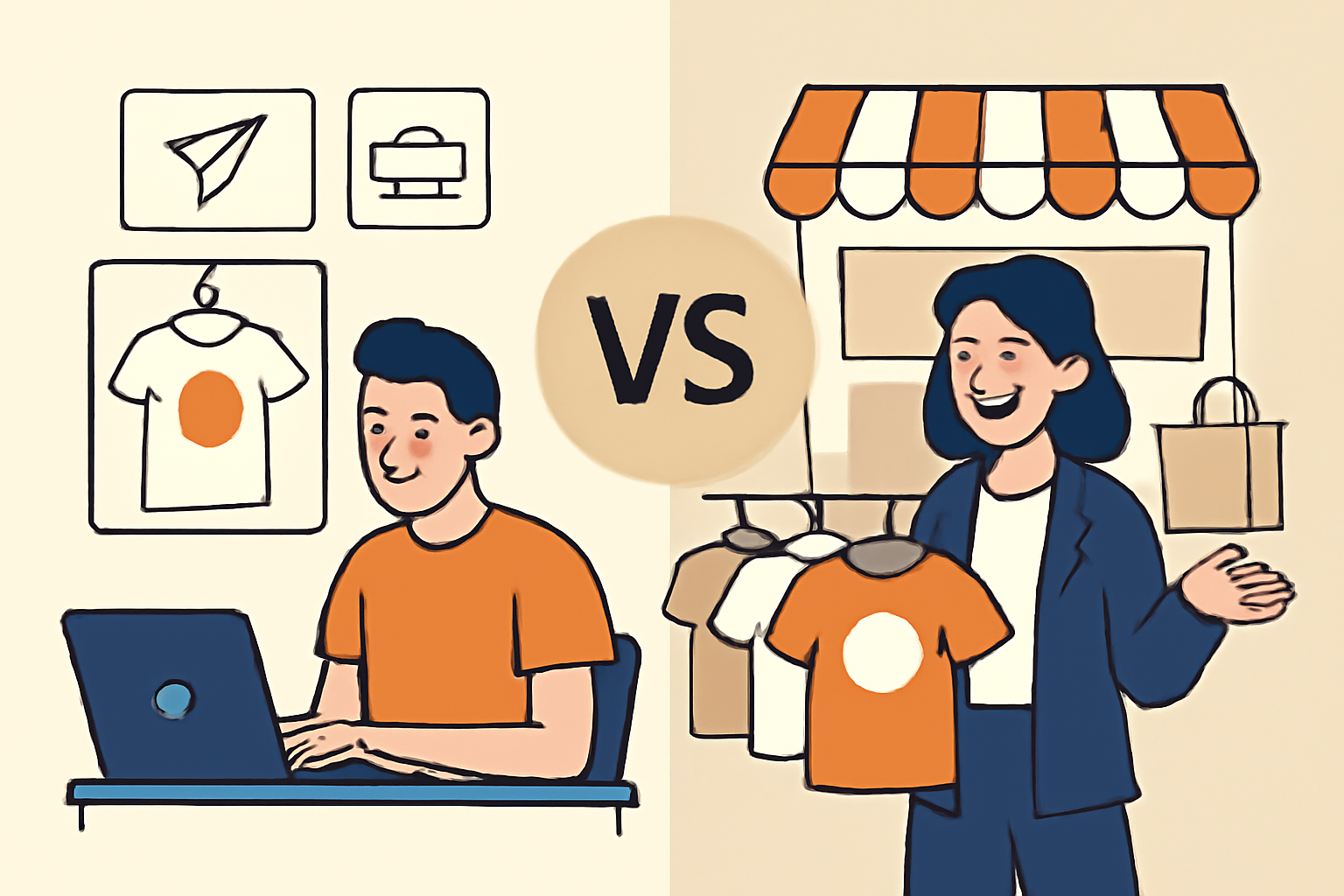
Key Differences Between Print on Demand and Traditional Retail
| Feature | Print on Demand | Traditional Retail |
|---|---|---|
| Inventory Management | No inventory required; products made to order. | Requires upfront investment in inventory and storage. |
| Initial Investment | Low initial costs; pay per order. | High initial costs; bulk purchasing needed. |
| Design Flexibility | Unlimited design options; easily test new ideas. | Limited by existing inventory; more risk in design choices. |
| Shipping | Handled by the POD provider; no need for fulfillment. | You manage shipping logistics and costs. |
| Market Risk | Lower risk; no leftover inventory. | Higher risk; potential unsold inventory. |
Pros and Cons of Print on Demand
Pros
- Low financial risk with no need for inventory.
- Flexibility to experiment with designs and products.
- No need for complex logistics and warehousing.
One of the standout advantages of print on demand (POD) is the significantly reduced financial risk. Traditional retail often requires hefty upfront investments in inventory, which can lead to substantial losses if products don't sell. In contrast, POD allows you to create and sell products without holding any stock, meaning you only pay for items after a customer has made a purchase. This model is particularly beneficial for newcomers who may not have the capital to invest heavily in inventory.
Moreover, the flexibility offered by print on demand is a game changer. You can easily test out new designs or products without the fear of leftover stock. For example, if you have a unique graphic design idea, you can create a sample product and gauge customer interest through social media or your online store. If it sells well, you can continue offering it; if not, you can pivot to another design. This iterative process allows you to stay relevant and responsive to market trends.
Additionally, with POD, you eliminate the headaches associated with logistics and warehousing. You don't have to worry about storage space or managing shipments, as these responsibilities fall to the POD provider. This means you can focus more on marketing and customer engagement rather than getting bogged down in operational details. For many sellers, this is a significant relief, allowing them to allocate their time and resources more effectively.
Cons
- Per-item costs can be higher than bulk purchasing.
- Longer production times may affect customer satisfaction.
- Quality control can be harder to manage.
While print on demand offers many advantages, it's not without its drawbacks. One notable con is that the per-item costs can be significantly higher than if you were to purchase products in bulk. This is due to the fact that POD services typically charge more for the convenience of producing items on demand. As a result, your profit margins may be slimmer, and you'll need to carefully consider your pricing strategy to remain competitive while still making a profit.
Another challenge is the longer production times associated with print on demand. Unlike traditional retail, where products are readily available, POD items are made only after a customer places an order. This can lead to delays in shipping, which may frustrate customers who expect quick delivery. It's essential to communicate estimated delivery times clearly on your website to manage customer expectations and reduce dissatisfaction.
Quality control is also a significant concern in the print on demand model. Since you're relying on a third-party provider to produce your products, you may not have direct oversight of the manufacturing process. This can lead to inconsistencies in product quality, which can harm your brand's reputation. To mitigate this risk, consider ordering samples of your products before offering them to customers. This allows you to assess the quality firsthand and make adjustments as necessary. Additionally, building a strong relationship with your POD provider can help ensure that you receive consistent quality and service.
In summary, while print on demand presents an attractive option for many sellers, it's crucial to weigh these pros and cons carefully. Understanding the potential challenges and benefits will help you make informed decisions as you navigate the world of online selling.
Pros and Cons of Traditional Retail
Pros
- Bulk purchasing can lower the cost per item.
- Immediate availability of products for customers.
- Greater control over quality and branding.
Cons
- High upfront investment and risk of unsold inventory.
- Storage and management of inventory can be complex.
- Less flexibility to pivot quickly in response to market trends.
Detailed Analysis of Pros
Understanding the pros of traditional retail can help you appreciate its appeal, especially for those who prefer a hands-on approach to business. Here's a closer look at each advantage:
Bulk Purchasing
Buying in bulk often leads to significant discounts from suppliers. For example, if you're a clothing retailer, purchasing 100 units of a popular t-shirt style can reduce your cost per shirt from $10 to $7. This strategy not only maximizes profit margins but also allows for competitive pricing against other retailers.
Immediate Availability
Customers value instant gratification. Traditional retail allows for immediate product availability, meaning customers can leave the store with their purchases right away. This immediacy can enhance customer satisfaction and loyalty. To capitalize on this, consider stocking seasonal items that customers may want immediately, like holiday decorations or summer apparel.
Control Over Quality and Branding
Owning your inventory means you can ensure the quality of the products you sell. You can inspect items before they hit the shelves, ensuring they meet your brand standards. Moreover, you can curate your product selection to align with your brand identity, creating a cohesive shopping experience. For instance, a boutique that focuses on eco-friendly products can select items that reflect this commitment, enhancing brand integrity.
Detailed Analysis of Cons
While traditional retail has its advantages, it's essential to weigh these against the drawbacks, which can significantly impact your business operations. Here's a deeper dive into the cons:
High Upfront Investment
Entering traditional retail often requires substantial capital. You need to invest in inventory, store space, and possibly staff. If you order too much inventory and it doesn't sell, you face the risk of being stuck with unsold items. For instance, if you invest $10,000 in inventory and only sell $6,000 worth, you're left with a $4,000 loss. To mitigate this risk, conduct thorough market research and consider starting with a smaller inventory to test demand.
Storage and Management Complexity
Managing inventory can be a logistical nightmare. You need adequate storage space, an efficient inventory management system, and a strategy for tracking stock levels. For example, if you're running a boutique, you might need to implement a point-of-sale system that integrates with your inventory management software to keep track of sales and stock levels seamlessly. Neglecting this aspect can lead to overstocking or stockouts, both of which can hurt sales.
Less Flexibility
Traditional retail is often slower to adapt to changing market trends. If a new trend emerges, it may take weeks or months to pivot your inventory. For example, if a specific style of clothing suddenly becomes popular, you may miss the opportunity to capitalize on that trend if your inventory is already set. To combat this, consider keeping a pulse on market trends through social media and fashion reports, allowing you to make informed purchasing decisions.
Common Mistakes to Avoid in Traditional Retail
- Failing to conduct market research before purchasing inventory.
- Overestimating customer demand and leading to excess inventory.
- Neglecting to implement an effective inventory management system.
- Ignoring the importance of branding in product selection and store layout.
Conclusion
While traditional retail offers several advantages, it's crucial to understand the potential pitfalls. By weighing these pros and cons carefully, you can make informed decisions that align with your business goals and customer needs. Whether you choose to go the traditional route or explore alternatives like print on demand, being aware of the landscape will empower you to succeed in the retail world.
Which Option Fits You?
Deciding between print on demand and traditional retail depends on various factors related to your business goals and resources. Here are some scenarios to consider:
- If you're a beginner: Print on demand solutions may be the better choice as it requires less capital and allows you to test the waters of e-commerce.
- If you have a strong brand: Traditional retail could work well if you can manage inventory and want to establish a physical presence.
- If you want to scale quickly: Print on demand is ideal for rapidly testing new designs without the overhead of inventory.
- If you prefer more control: Traditional retail may offer you the ability to oversee product quality and branding more closely.
Addressing Print on Demand Setbacks
While print on demand offers numerous advantages, it's not without its challenges. Overcoming print on demand challenges often involves enhancing your marketing strategies, ensuring product quality, and optimizing your online presence. By addressing these setbacks proactively, you can build a successful POD business.
Common Setbacks in Print on Demand
Understanding the common setbacks in a print on demand business is crucial for long-term success. Here are some frequent issues that sellers face:
- Quality Control Issues: Products may not always meet your quality standards, leading to customer dissatisfaction.
- Shipping Delays: Longer shipping times can frustrate customers and affect your brand reputation.
- Marketing Challenges: Finding the right audience and effectively promoting your products can be daunting.
- Dependence on Third-Party Suppliers: Relying on suppliers for production and fulfillment can lead to inconsistencies.
- Price Competition: Competing with lower-priced alternatives can squeeze your profit margins.
Strategies to Overcome Setbacks
To tackle these challenges head-on, consider the following strategies:
1. Establish Quality Control Measures
Ensure the products you sell meet high-quality standards. Here's how:
- Sample Orders: Regularly order samples from your suppliers to check for quality and consistency.
- Supplier Research: Choose reputable suppliers known for their reliability and product quality.
- Customer Feedback: Encourage customers to leave reviews and act on their feedback to improve your offerings.
2. Improve Shipping Practices
Shipping delays can lead to unhappy customers. To mitigate this:
- Set Realistic Expectations: Clearly communicate shipping times on your website and product pages.
- Choose Reliable Shipping Partners: Work with shipping companies that have a good track record for timely deliveries.
- Offer Tracking Information: Provide customers with tracking numbers to ease anxiety about their orders.
3. Enhance Marketing Strategies
Marketing is key to attracting customers. Here are some effective tactics:
- Targeted Advertising: Use platforms like Facebook and Instagram to target specific demographics that align with your products.
- Content Marketing: Create engaging content that resonates with your audience, such as blog posts, videos, or social media updates.
- Email Campaigns: Build an email list and regularly send out newsletters with promotions and product highlights.
4. Diversify Your Supplier Base
To reduce risks associated with supplier dependency:
- Multiple Suppliers: Work with more than one supplier to ensure you have alternatives if one fails.
- Local Suppliers: Consider partnering with local suppliers for faster shipping and better communication.
- Supplier Relationships: Build strong relationships with suppliers to negotiate better terms and improve reliability.
5. Stay Competitive with Pricing
To effectively compete in a crowded market:
- Value Proposition: Highlight the unique features of your products to justify your prices.
- Promotions and Discounts: Run limited-time offers to attract price-sensitive customers.
- Cost Management: Regularly evaluate your costs to find areas where you can save without sacrificing quality.
Checklist for Addressing Setbacks
Use this checklist to ensure you are addressing potential setbacks in your print on demand business:
- Have you ordered samples from your suppliers in the last month?
- Are your shipping times clearly communicated on your website?
- Have you updated your marketing strategy recently to include new trends?
- Do you have at least two suppliers for each product category?
- Are you regularly analyzing your pricing strategy against competitors?
By implementing these strategies and regularly checking in on your operations, you'll be better equipped to handle the challenges of print on demand. Remember, every setback is an opportunity to learn and grow your business.
Conclusion
Both print on demand and traditional retail present unique advantages and challenges. By carefully evaluating your business needs and resources, you can choose the model that best fits your goals. If you're still on the fence, consider starting small with print on demand while exploring traditional retail options as your business grows. Take the leap and start exploring the world of print on demand today!
Key Takeaways
- Flexibility: Print on demand allows for a more adaptable business model with lower upfront costs.
- Inventory Management: Traditional retail requires careful inventory management and upfront investment, while print on demand eliminates the need for inventory storage.
- Market Testing: Use print on demand to test new designs or products without the financial risk associated with traditional retail.
Steps to Make Your Decision
- Assess Your Resources: Determine your budget, time availability, and skill level. If you have limited capital, print on demand may be the better option.
- Identify Your Target Market: Research your audience to understand their preferences. If they favor unique, custom items, print on demand could be advantageous.
- Consider Your Product Range: Decide whether you want to offer a wide variety of products or focus on a niche. Print on demand is ideal for niche markets.
- Evaluate Your Marketing Strategy: Think about how you will promote your products. Print on demand often relies heavily on online marketing.
- Test and Iterate: Start with a small print on demand project to gauge interest and gather feedback. Use this data to refine your approach.
Common Mistakes to Avoid
- Ignoring Quality Control: Just because you're not handling the printing doesn't mean you shouldn't care about the quality. Always order samples first.
- Overcomplicating Your Offerings: Start with a few designs rather than overwhelming your audience with options. Focus on quality over quantity.
- Neglecting Customer Service: Whether you choose print on demand or traditional retail, excellent customer service is crucial. Don't overlook this aspect!
Final Thoughts
Ultimately, the choice between print on demand and traditional retail will depend on your specific circumstances and business goals. Print on demand offers a low-risk entry point into the e-commerce world, while traditional retail may provide a more established path with its own set of challenges and rewards. Remember, you can always pivot your strategy as you learn more about your market and refine your business model. So, take the leap, keep learning, and enjoy the journey of entrepreneurship!
Enjoying This Article? Join The Free POD Community. Connect with other print-on-demand sellers, ask questions, and keep learning inside the Print On Demand Coach community.
Learn More